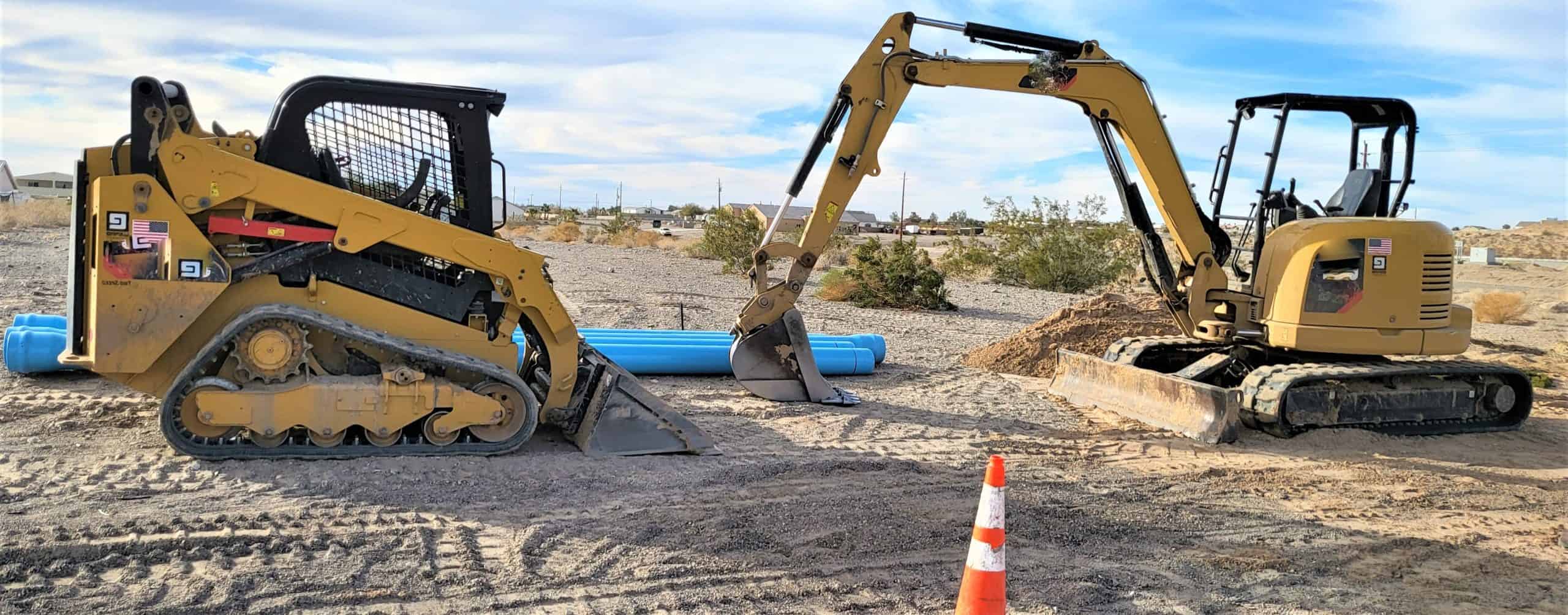
Mini Excavator vs Skid Steer: A Complete Comparison
Picking between a mini excavator and a skid steer trips up more homeowners, landscapers, and small contractors than almost any other equipment call. Both machines are compact. Both run serious hydraulics. Both take a pile of attachments. They look close enough that people assume the choice is a coin flip. It isn’t. And the wrong pick burns days you don’t have.
These machines are built for different primary jobs. One reaches down and digs with precision. The other hauls material across a site fast. This guide covers what each machine is, how they stack up on the eight things that actually matter, what they cost, and how to land on the right pick.
The Short Answer, Dig or Carry
If the core job is digging below grade, a trench, a pool, a foundation, a stump, rent or buy a mini excavator. If the core job is moving material across a site, grading, loading a truck, spreading gravel, clearing snow, rent or buy a skid steer. Mini excavators are tracked digging machines with a hydraulic boom and a 360-degree rotation, built to reach down and out with precision. Skid steers are rigid-frame loaders with lift arms and a quick-attach plate, built to push, lift, carry, and swap between dozens of attachments at high speed.
That rule sorts most people out fast. The rest of this guide is for the jobs that don’t sort that cleanly.
What Is a Mini Excavator?
A mini excavator is a small, tracked digging machine with a hydraulic boom, dipper arm, and bucket mounted on a cab that spins a full 360 degrees on top of the undercarriage. Also called a compact excavator, it’s purpose-built to dig below grade, trenches, holes, foundations, pool excavations, with reach and precision a loader just can’t match. Because the cab rotates independently of the tracks, the operator can dig, swing, and dump spoils without repositioning the machine. Most mini excavators ride on rubber tracks, which means low ground pressure and solid footing on soft or uneven terrain.
Mini Excavator Size Classes
Mini excavators run from 1 to 10 tons in operating weight. The 1-ton class is the backyard hero. It squeezes through a standard 36-inch residential gate, and some models have retractable tracks that narrow to roughly 39 inches. Dig depth on those is about 5 to 7 feet. The 3-ton class is the workhorse rental size and reaches 6 to 12+ feet depending on the model. Jump up to 5-10 tons, and you’re in commercial utility and foundation territory. Zero tail swing models keep the back of the cab inside the tracks during rotation, which is huge when you’re working inches from a wall.
Key Features at a Glance
- Tracked undercarriage, almost always rubber tracks
- 360-degree rotation of the upper house
- Hydraulic boom, dipper arm, and bucket for precision digging
- Typical dig depth, 6 to 12+ feet, depending on size class
- Typical travel speed, 2 to 3 mph
- Excellent visibility around the boom and bucket
- Low ground pressure, gentler on turf and soft ground
What Is a Skid Steer?
A skid steer is a compact, rigid-frame loader with lift arms mounted beside the operator’s cab and a quick-attach coupler out front that takes 100+ different attachments. Also called a skid steer loader or skid loader, it turns by “skidding,” driving the wheels or tracks on one side faster than the other, which gives it a zero-radius turn inside its own footprint. Skid steers are built to push, lift, carry, and swap tools fast. That’s why they’re the versatile workhorse on construction, landscaping, and ag jobsites. They move quickly, handle material handling efficiently, and switch between tasks in minutes thanks to the quick-attach system.
Wheeled Skid Steer vs Compact Track Loader
Not every skid steer rolls on wheels. The compact track loader, or CTL, is the tracked version, with the same rigid frame, same lift arms, same quick-attach plate, just running on rubber tracks instead of pneumatic tyres. Wheeled skid steers are quicker on hard surfaces like concrete and asphalt, and cheaper to keep running. Tires last longer and cost less than rubber tracks. CTLs handle mud, soft ground, and slopes way better and spread their weight more evenly, which narrows the terrain gap against a mini excavator. The tradeoff is that they cost more to buy, rent, and service.
Key Features at a Glance
- Rigid frame with lift arms beside the cab
- Quick-attach coupler compatible with 100+ attachments
- Zero-radius skid turn inside the machine’s footprint
- Typical travel speed, 7 to 12 mph
- Rated operating capacity, 1,650 to 3,300 pounds for common size classes
- Engine output, 66 to 100 HP in the mid-size range
- Available as wheeled or compact track loader
Mini Excavator vs Skid Steer, 8 Differences That Matter
Here is the mini excavator vs skid steer comparison, broken down into eight differences that actually determine your project.
1. Digging Depth and Precision
This one isn’t close. A mini excavator digs way deeper and way more precisely than a skid steer. A 3-ton mini excavator hits 6 to 12+ feet of dig depth, cuts clean vertical trench walls, and works neatly around utilities because the operator can plant the tracks and rotate the cab to dig. A skid steer with a backhoe attachment can handle shallow trenching, a few feet tops, but the dig-depth, swing, and control are in a different league.
Verdict: Mini excavator for anything that needs precision digging or reach below a few feet.
2. Material Handling and Site Speed
A skid steer crosses a site at 7 to 12 mph. A mini excavator crawls at 2 to 3 mph. That’s a three- to fourfold gap, and it compounds with every cycle. Skid steers also run bigger buckets and higher lifting capacities for their size, so loading a dump truck with soil, mulch, or gravel takes a fraction of the trips. A mini excavator can swing material around, but it’s slow and needs a clear zone.
Verdict: Skid steer for any job built around material handling.
3. Attachment Ecosystem
Both machines run attachments. The ecosystems just look different in size and focus. A skid steer takes more than 100+ attachments through the universal quick-attach plate, buckets, pallet forks, grapples, augers, trenchers, hydraulic breakers, angle brooms, snow pushers, snow blowers, forestry mulchers, bale spears, planers, stump grinders, the list keeps going. Most major equipment brands share the same coupler standard, so attachments swap across machines without fuss. A mini excavator also runs useful attachments, hydraulic thumbs, tilt buckets, augers, breakers, compactors, rippers, and mulchers, but the ecosystem stays locked on earthwork and demolition rather than high-speed material handling.
Verdict: Skid steer for versatility and task-switching. Mini excavator if your attachments are mostly earthwork tools.
4. Manoeuvrability in Confined Spaces
Both machines are compact. They handle tight spaces differently. A skid steer pivots in place with a zero-radius turn, but it still needs room for its length and lift arms. A mini excavator with zero tail swing works inches from a wall or fence because nothing sticks past the tracks when the cab rotates. Many 1-ton mini excavators also have retractable tracks that narrow to about 39 inches, so they slide through a standard residential gate. Most skid steers and CTLs run 60+ inches wide and won’t fit through a typical backyard gate unless you take a panel off.
Verdict: Mini excavator for backyard work, urban jobsites, and anywhere the machine has to squeeze in and rotate.
5. Ground Impact and Terrain
Mini excavators almost always run on rubber tracks and spread their weight across a bigger contact patch, so ground pressure stays low. A skid steer on wheels tears up turf quick. Every skid turn grinds tyres against the grass, and it bogs down in mud. A compact track loader closes some of the gap on soft ground, but still puts more point pressure on the surface than a tracked mini excavator during aggressive turns.
Verdict: Mini excavator for finished lawns, soft soil, and uneven terrain. Wheeled skid steer for hard surfaces. CTL for a middle ground.
6. Operator Visibility and Learning Curve
A mini excavator gives the operator clear sightlines around the boom and bucket. Critical for precision digging and working around utilities. A skid steer has a great front view for carrying and dumping, but it creates blind spots behind and beside the cab, especially with a loaded bucket or bulky attachment. New operators usually find a mini excavator easier to learn because it sits stable and rotates in place.
Verdict: Close call. Mini excavator edges ahead for first-time operators doing precision work.
7. Fuel Efficiency and Operating Costs
A mini excavator often sips less fuel during sustained digging because the machine sits stationary with the engine at a steady RPM. A skid steer runs higher RPMs to drive both traction and hydraulics, so fuel burn climbs across a shift. On the maintenance side, pneumatic tyres on a wheeled skid steer are cheaper to replace than rubber tracks. Track replacement on a mini excavator or CTL often runs over $1,000 per track. Sourcing genuine spare parts from a dealer that stocks your brand keeps that cost predictable.
Verdict: Wheeled skid steer is the cheapest to maintain. A mini excavator is often the cheapest to fuel per hour of actual digging.
8. Transport and Tow-Vehicle Requirements
Smaller mini excavators in the 1-to-3-ton class can often be towed by a half-ton pickup with a properly rated trailer. Skid steers and CTLs in the 3-to-5-ton range are deceptively heavy. Plenty of units come in at 7,000 to 9,000 pounds, and you’ll usually want a three-quarter-ton truck with a heavy-duty trailer and trailer brakes. Confirm your tow setup matches the machine’s loaded weight before you rent.
Verdict: Smaller mini excavator wins on transport ease for a homeowner with a half-ton pickup.
Summary Comparison Table
| Dimension | Mini Excavator | Skid Steer |
| Primary job | Precision digging | Material handling |
| Dig depth | 6 to 12+ feet | Shallow only |
| Travel speed | 2 to 3 mph | 7 to 12 mph |
| Rotation | 360-degree rotation of the cab | Zero-radius skid turn |
| Undercarriage | Rubber tracks | Pneumatic tyres or tracks |
| Attachments | Focused earthwork tools | 100+ diverse tools |
| Confined spaces | Excellent (zero tail swing) | Good but wider |
| Turf impact | Low | High (wheels) / Medium (CTL) |
| Operator visibility | Excellent | Good (blind spots rear) |
| Best for | Trenches, pools, foundations | Loading, grading, snow |
When to Choose a Mini Excavator
A mini excavator earns its keep when the job needs reach, precision, or work in a tight footprint. Being able to rotate 360 degrees with the tracks planted makes it an easy pick whenever the operator needs to dig, swing, and dump without moving the machine.
Choose a mini excavator for:
- Trenching for water lines, electrical conduit, drainage, or septic
- Pool excavation and spa or hot-tub pits
- Foundation and footing digging for additions or small structures
- Stump removal and deep root ball extraction
- Backyard work behind fences or inside narrow gates
- Utility installation near existing lines, visibility, and control matter here
- Precision grading and contour work on landscaping projects
- Demolition that needs reach, picking apart a deck or small structure
- Any job on a finished lawn where ground pressure matters
Utility contractors, landscape designers, and property owners doing their own work lean on mini excavators for this reason.
When to Choose a Skid Steer
A skid steer is the right call when the job runs on carrying, grading, or switching between tasks. The quick-attach system means one machine handles five different jobs in a single day. Load a truck in the morning. Grade the driveway after lunch. Push snow in the evening.
Choose a skid steer for:
- Loading trucks with soil, gravel, mulch, or aggregate
- Site grading, driveway prep, and topsoil spreading
- Material handling across a job site or lot
- Snow removal with pushers, blades, or snow blowers
- Land clearing with a forestry mulcher or brush cutter
- Moving pallets on a construction site or farm
- Demolition cleanup and debris hauling
- Road and asphalt work with cold planer attachments
- Any job that needs two or more different attachments in a single shift
Farmers, snow-removal contractors, commercial builders, and municipal crews rely on skid steers to cover dozens of tasks across the seasons.
Mini Excavator Rental Cost vs Skid Steer Rental Cost, Price Comparison
Cost is the other half of the call. Both machines sit in the same general price neighbourhood, but the numbers shift based on size class, rental duration, and whether you’re counting long-term maintenance.
Daily, Weekly, and Monthly Rental Rates
Daily rental rates usually run $200 to $400 for a skid steer and $250 to $500 for a mini excavator of comparable size. Weekly rates come with real discounts, often 3 to 4 times the daily rate instead of 7. Monthly rates drop further. Rates swing by region, machine size, and dealer. Urban markets pull higher. Rural rentals usually sit at the low end. Delivery, pickup, fuel top-off, and damage waivers get billed separately, so budget an extra 15 to 25 percent on top of the base rate.
New Machine Purchase Price Ranges
Frequent renting catches up to ownership fast. A new skid steer in the standard size range runs $10,000 to $75,000, with most mid-size wheeled units landing in the $35,000 to $55,000 band. A new mini excavator in the 3.5- to 5-ton range costs $22,000 to $90,000, with a typical 3-ton rental-spec machine priced around $40,000 to $60,000. Used machines with moderate hours cut those numbers by 30 to 50 percent. Looking at the full range of new and used machines at a local dealer is usually the fastest way to benchmark real prices in your market. Check the undercarriage and hydraulics before you hand over cash.
Operating Costs, Fuel, Tracks vs Tires, Maintenance
The two machines cost different amounts to keep running. A wheeled skid steer is the cheapest in terms of consumables. Pneumatic tyres are cheap to replace. Rubber tracks on a mini excavator or CTL last longer per hour, but run more than $1,000 per track. Fuel burn sits at 1.5 to 3 gallons per hour for a mid-size mini excavator and 2 to 4 gallons per hour for a skid steer working hard. Add in hydraulic fluid, filters, and routine service. Annual operating cost on a machine running 500 hours a year lands between $2,500 and $6,000. A scheduled machinery service program keeps that figure predictable and catches small issues before they become big ones.
On resale, mini excavators hold value well because residential and utility demand stays steady. High-hour skid steers can take a bigger resale hit depending on condition and service records.
When to Rent Both a Mini Excavator and Skid Steer
Plenty of jobs aren’t clean “dig” or “carry” projects. They’re both at once. A pool install needs the pool dug (excavator work), and then the spoil hauled off and the deck pad graded (loader work). A French drain project needs trenches cut and gravel spread. On jobs like these, the fastest and often cheapest workflow is to rent both machines for the days they overlap. Let the mini excavator dig while the skid steer carries.
A 5-day single-machine project often wraps in 2 to 2.5 days with both, and the extra rental cost is offset by the shorter timeline. Most dealers offer a combo discount if both come from the same yard.
Which Is Better, a Mini Excavator or a Skid Steer? A Decision Framework
The mini excavator vs skid steer choice usually resolves in under 30 seconds with the checklist below. Run through it before you call the rental yard or your local trucks and machinery dealer.
A 5-Question Decision Checklist
- What is the primary task? Digging below grade, trenching, pool, foundation, stumps, pick the mini excavator. Carrying, grading, or loading, pick the skid steer.
- How tight is the jobsite? If the machine has to squeeze through a 36-to-48-inch gate or work inches from a wall, pick a 1-ton mini excavator with retractable tracks and zero tail swing.
- What does the ground look like? Finished lawn or soft soil favours the mini excavator or a CTL. Hard surfaces favour a wheeled skid steer.
- How many different tasks are in the job? Five tasks in one day with different tools, skid steer. One dominant digging task is the mini excavator.
- Is there significant material movement after digging? If yes, think about renting both.
Common Project Scenarios at a Glance
- Installing a pool in a fenced backyard, mini excavator (likely 1-ton with retractable tracks)
- Grading a gravel driveway, skid steer
- Running a water line 80 feet from the street, mini excavator (and a skid steer to backfill)
- Spreading 20 yards of mulch with a skid steer
- Clearing a quarter-acre of brush with a skid steer with a forestry mulcher
- Removing three large stumps with a mini excavator
- Snow clearing a commercial lot, skid steer or CTL
- Building a retaining wall and shaping a slope, both, if the project is large
Frequently Asked Questions
Mini Excavator vs Skid Steer: Which Is Better for Digging?
A mini excavator is substantially better for digging. It reaches 6 to 12+ feet deep, cuts clean vertical trench walls, and gives the operator 360-degree rotation to dig, swing, and dump without moving the machine. A skid steer with a backhoe attachment can handle shallow trenching, but dig depth, swing, and control are limited compared to a purpose-built excavator.
Which is better for moving material, a mini excavator or a skid steer?
A skid steer wins for material handling. It travels at 7 to 12 mph, carries bigger buckets, and has higher lifting capacities than a comparable mini excavator.
Can a skid steer dig like a mini excavator?
No, not to the same depth or precision. A skid steer with a backhoe attachment can dig a few feet down, but it can’t match a mini excavator on trench depth, vertical-wall accuracy, or control around existing utilities. For any job that needs to reach beyond a couple of feet, a mini excavator is the right tool.
Which machine fits through a backyard gate, a mini excavator or a skid steer?
A 1-ton mini excavator with retractable tracks usually slips through a standard 36-to-48-inch residential gate. Some models narrow to roughly 39 inches for access. Most skid steers and compact track loaders run 60+ inches wide and won’t fit unless you pull a gate panel or a fence section.