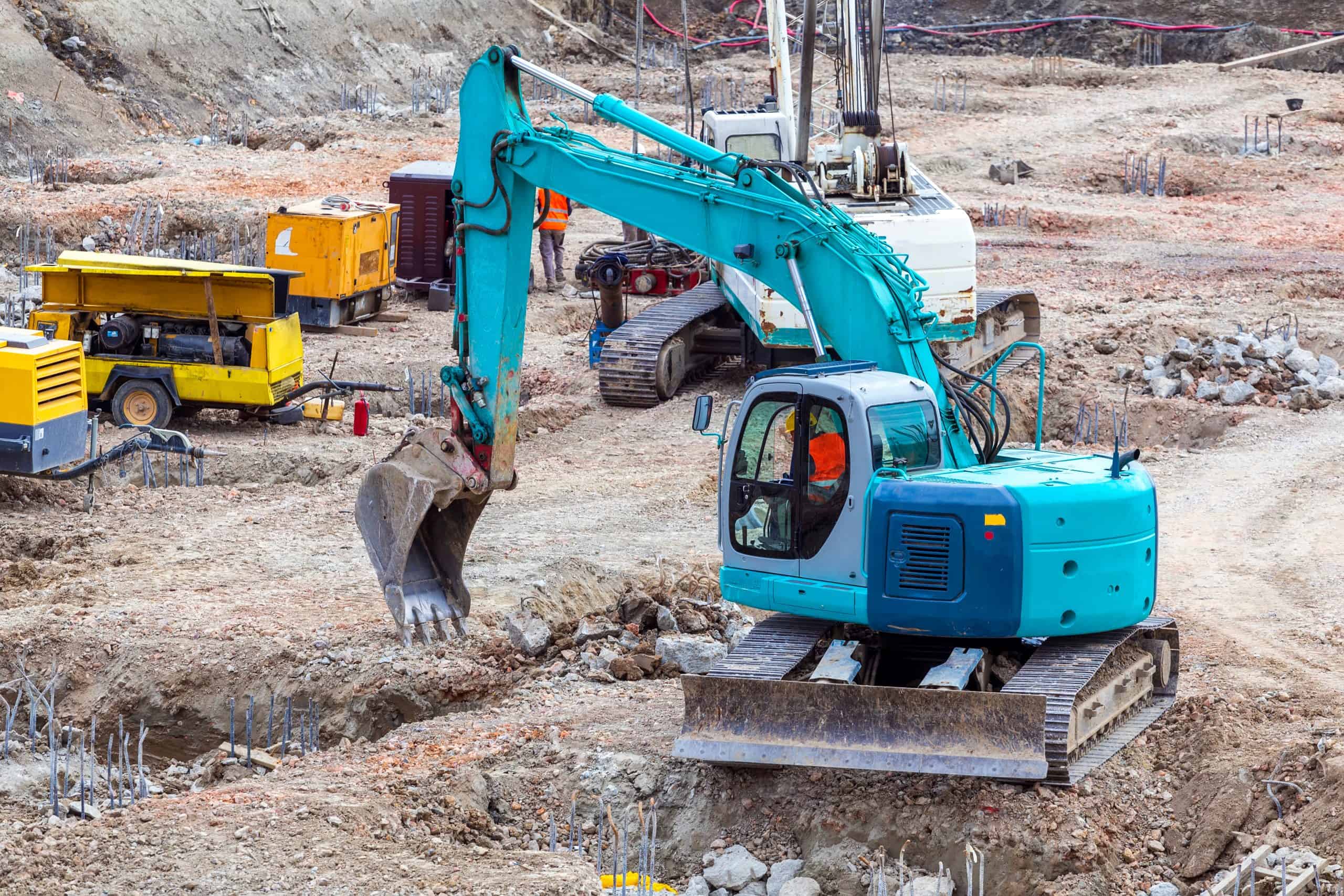
Mini Excavator Buying Guide Australia: How to Choose the Right Size and Spec
You’re hiring a mini excavator every second week. Three hundred dollars a day, plus the $300 float fee each way, plus 50% weekend surcharges when you need it most. You call at 3 pm Friday, and they’re booked until Wednesday. You return it spotless and still cop a $150 cleaning charge. Meanwhile, you’re watching $25,000 to $40,000 per year disappear into someone else’s business while your competitor rocks up to every job with his own machine. At what point does owning make more financial sense than the merry-go-round of hiring?
This guide gives you the actual numbers to figure that out. We’ll show you the breakeven formula with a real calculation using current Australian hire rates ($250-400/day) and ownership costs ($10,000-15,000/year). You’ll learn which excavator tonnage matches your typical jobs (because a 1.7-tonne excavator handles very different work than a 3-tonne, and buying the wrong one means 5-10 years of regret). We compare the brands that actually matter in Australia, with honest assessments of where each shines and falls short. And we provide a maintenance schedule that protects your investment, including specific intervals like 250-hour oil changes and 1000-hour major services.
A mini excavator, also called a compact excavator or mini digger, is a tracked earthmoving machine weighing between 1 and 8 tonnes, designed for jobs where large excavators (20+ tonnes) cannot access or would be excessive. These machines are now Australia’s fastest-growing equipment category. The multi-billion-dollar construction machinery market saw mini excavators outsell all other categories in 2024, with the 1.5 to 2.5-tonne class the most popular segment among Australian buyers. Their appeal makes sense: tow one behind a standard ute, access 900mm-wide side gates, and handle everything from pool excavation to 2.5-metre-deep trenching. But the market’s flooded with 40+ brands, and making the wrong choice costs you for the next decade.
Important note: Pricing, regulations, and market conditions change frequently. All figures in this guide are indicative ranges based on NSW conditions at the time of writing. Verify current pricing with dealers and check regulations with relevant authorities before making decisions. Individual results will vary based on your specific circumstances, usage patterns, and location.
Power Your Business with STM Trucks & Machinery
Whatever the size of your business, our experienced sales team will help you get the best from your budget.
Should You Buy or Keep Hiring? The Australian Breakeven Formula
Here’s the question every tradie eventually asks: when does owning actually beat hiring? The answer isn’t complicated once you have real numbers. Those numbers favour buying sooner than most people think.
Current dry-hire rates for a 1.5- to 3-tonne mini excavator in NSW range from $250 to $400 per day. Sydney metro averages $300- $ 350/day. Regional areas like Queanbeyan or Wollongong run $250-300/day. Add the float fee for transport delivery and pickup, typically $250 to $350 each way for metro areas, though longer distances push this higher. Weekend rates jump 50% at most hire companies. And if you need the excavator for a job that runs 2 days longer than planned? You’re paying the full daily rate for hours you barely used.
Let’s do the maths on a real scenario. Say you’re hiring a 1.7-tonne excavator at $300 per day, roughly 100 days per year (about 8-9 days monthly). That’s $30,000 in hire costs alone. Add 25 mobilisations at $500 average round-trip, and you’re at $42,500. A quality new 1.7-tonne machine from a brand like Kobelco, the Japanese heavy equipment manufacturer renowned for fuel-efficient excavators, costs $40,000 to $50,000.
The breakeven formula works like this:
Purchase Price ÷ (Annual Hire Cost − Annual Ownership Cost) = Years to Break Even
Your annual ownership costs break down specifically:
- Fuel: $3,600-5,400 (600-900 hours × 3L/hour × $2/L diesel)
- Servicing and maintenance: $2,500-4,000 (two minor services at $400-600, one major at $1,200-1,800, plus consumables)
- Insurance: $1,800-2,800 (plant insurance through brokers like NTI or Vero)
- Registration and compliance: $350-500
- Depreciation (opportunity cost): $4,500-7,500 (10-15% annually on a $45,000 machine)
All up: $12,750-20,200 per year to own and run a mini excavator, with $15,000 being a realistic middle estimate for 600-700 hours of annual use.
If you’re hiring 80+ days a year at $300 per day plus floats, you’re spending $32,000-40,000 annually. Ownership costs sit around $15,000. That’s a $17,000- $ 25,000 annual savings once you’ve paid off the machine. On a $45,000 excavator financed over 5 years at 8% interest, your monthly repayment runs about $910. Combined with running costs, you’re at roughly $26,000/year total, still $6,000-14,000 cheaper than hiring.
Here’s the honest assessment, though: if you’re only hiring 30-40 days a year (2-3 days monthly), buying doesn’t stack up. The machine sits for 300+ days per year, depreciating, while you pay $2,500/year in insurance on something gathering dust. Hiring also makes sense if your jobs vary wildly in size. You might need a 1.5-tonne one week and a 5-tonne the next. No single machine covers that range efficiently.
The Real Numbers: A Worked Example
Let’s get specific with a 1.7-tonne excavator, the most popular size for landscapers and small contractors doing 3-5 jobs per week.
Hiring scenario (100 days/year):
- 100 hire days × $300/day = $30,000
- Float fees: 25 mobilisations × $500 round trip = $12,500
- Weekend surcharges: 15 weekend days × $150 extra = $2,250
- Damage waiver/excess reduction: $50/hire × 25 hires = $1,250
- Total annual hire cost: $46,000
Ownership scenario:
- Purchase price (new Kobelco SK17SR-6 or Kubota U17-3): $45,000
- 5-year finance at 8%: $910/month = $10,920/year
- Fuel: 650 hours × 3.2L/hour × $2.00/L = $4,160
- Maintenance: 2 minor services ($500 each) + 1 major ($1,500) + consumables ($600) = $3,100
- Insurance (NTI Plant Insurance, $45K value): $2,400
- Registration: $400
- Total annual ownership cost: $20,980
First-year saving: $25,020
Even better, that finance payment disappears in year 6. Your ongoing cost drops to $10,060/year. At that point, you’re saving $35,000+ annually versus hiring. The machine pays for itself in under 2 years.
These figures are indicative. Your actual costs depend on usage intensity, maintenance practices, fuel prices, and local conditions.
What Size Mini Excavator Do You Actually Need?
Buying the wrong size excavator is one of the most expensive mistakes you can make. Too small, and you’re struggling 3 hours on a job that should take 1. Too big, and you’ve paid $20,000 extra for a capability you use twice a year, plus you can’t tow it behind your ute anymore.
Operating weight (measured in tonnes and representing the excavator’s total mass, including 95% of fuel, hydraulic fluid, and a standard bucket) determines both the machine’s digging capability and its transport requirements. Here’s how different sizes match to common Australian jobs:
0.8 to 1.5 Tonnes: Micro Excavators
Best for tight access work, including backyard landscaping through 850-900mm side gates, indoor demolition, or trenching jobs under 100mm pipe diameter. The Kubota K008-3 (800kg) fits through openings just 780mm wide. These tiny machines dig to 1.7-2.0 metres depth and develop 8-12kN bucket breakout force (the digging power measured in kilonewtons). The trade-off? They struggle in heavy clay. What takes a 1.7-tonne machine 1 hour takes these 2-3 hours. Perfect if 70%+ of your work is residential gardens and small drainage jobs under 300mm deep.
1.5 to 3 Tonnes: The Sweet Spot
This is where the majority of Australian tradies land, and for good reason.A 1.7 to 2.5-tonne machine handles residential landscaping, pool excavation in Sydney’s notoriously sticky Wianamatta clay, 100-150mm utility trenching, and retaining walls up to 1.2 metres. For a detailed breakdown of mini excavator uses and benefits, see our complete guide. Digging depth hits 2.4 to 3.0 metres. Bucket breakout force runs 15-22kN, enough to crack through most clay and shale. Crucially, a 1.7-tonne machine on a tandem trailer totals 2,300-2,500kg, within the towing capacity of a HiLux, Ranger, or Navara (3,500kg rated).
3 to 6 Tonnes: Compact Excavators
When you’re doing serious earthmoving (large pools over 8m length, house site cuts requiring 500+ cubic metres removed, commercial landscaping, or light demolition), you need this range. If you’re weighing up whether to go bigger, our guide on mini excavators vs larger models breaks down the key differences for NSW tradies. Digging depth extends to 3.5-4.5 metres. Bucket force jumps to 25-40kN. A 3.5-tonne Kobelco SK35SR-6 develops 28.4kN of digging force. It’ll crack through sandstone that stops a 1.7-tonne dead in its tracks. The catch: a 3.5-tonne excavator plus tandem trailer weighs 4,800-5,200kg. You need a truck, a heavy-duty plant trailer ($15,000-25,000), and potentially an MR licence if the combination exceeds 4,500kg GCM.
Zero Tail Swing: When It Matters
Standard excavators have a counterweight extending past the tracks when you rotate. That rear end can swing 400-600mm beyond the track width. Zero tail-swing designs (like the Kobelco SK17SR-6 or Kubota U17-3) tuck the counterweight inside the track width, so you can rotate 360° without the back end swinging into fences or buildings. The SK17SR-6 has just 690mm swing radius. It can dig and dump through 180 degrees within a 2.22m working space. If 40%+ of your work is within 1 metre of structures, zero tail swing is worth the $3,000-5,000 premium.
Transport Considerations: What Can You Legally Tow?
Here’s where 30% of buyers get caught out. That cheap 3.5-tonne excavator looks great on paper until you realise you can’t legally tow it with your ute.
A standard tandem plant trailer (like a Sureweld or Loadmaster PT3500) has a rated capacity of 3,000-3,500kg and weighs 800-1,100kg empty. Your typical dual-cab ute (HiLux SR5, Ranger Wildtrak, Navara ST-X) has a towing capacity of 3,500kg and a Gross Combined Mass (GCM) of 6,000kg.
Let’s do the maths:
1.7-tonne excavator:
- 1,700kg
- Tandem trailer (empty): 950kg
- Total: 2,650kg, well within limits
Now try a 3-tonne machine:
- 3.0-tonne excavator: 3,000kg
- Heavy-duty trailer rated for 3,500kg: 1,200kg
- Total: 4,200kg, exceeds 3,500kg towing capacity
You’d need a cab-chassis ute (like a HiLux with upgraded suspension and 4,500kg towing) or a small truck. That adds $30,000- $ 60,000 to your transport setup.
In New South Wales, tracked excavators need conditional registration to travel on public roads. For full details on compliance, loading procedures, and safety requirements, read our guide on how to transport a mini excavator safely. This costs $350-450 annually and limits you to “necessary road use,” basically, travelling between worksites and your yard. You can’t just cruise down the highway for fun. Most operators trailer their machines anyway because tracks chew up roads and travel at a maximum of 5 km/h.
The transport question often decides the size question. If you’re a one-person operation running 4-5 jobs weekly across Sydney, a 1.7 to 2-tonne excavator behind your ute keeps logistics simple. Fifteen minutes to load, no special licence needed. Once you’re into 3-tonne-plus territory, you’re adding $500-800/week in transport complexity or buying a truck.
Comparing Mini Excavator Brands: What Actually Matters in Australia
Here’s where the debates get heated. Every bloke at the servo has an opinion on brands, and 90% of those opinions come from one machine they owned in 2015 or one mate’s bad experience with a lemon.
Let’s cut through it with what actually matters for Australian buyers: reliability (measured in unplanned downtime hours per 1,000 operating hours), parts availability (can you get a hydraulic hose on a Thursday arvo in Campbelltown?), dealer support (workshop within 50km?), and resale value (what percentage of purchase price you recover in 5 years).
Japanese Premium Tier
Kobelco, Kubota, Komatsu, Yanmar, and Hitachi have earned their reputation through 40+ years in the Australian market. Kobelco, the Japanese manufacturer owned by Kobe Steel, produces Kobelco mini excavators from 1,035kg to 5,095kg suited to Australian conditions. Their SK17SR-6 features iNDr (Integrated Noise and Dust Reduction) technology that cuts noise by 10dB and protects the cooling system from the dust that kills other machines. Fuel economy is approximately 20% better than that of previous Kobelco models. We’re talking 2.8-3.2L/hour versus 3.5-4.0L/hour for older machines, which saves $1,500-2,500 annually on a 700-hour machine.
Kubota is probably the most common mini excavator on Australian sites. The U17-3 and newer U17-5 Premium have parts available through an extensive national dealer network with over 140 locations Australia-wide. Any diesel mechanic in Australia has worked on a Kubota. Resale value runs 55-65% of the new price at 5 years/2,500 hours.
Komatsu’s PC18MR-3 includes their KOMTRAX remote monitoring system as standard. You can check the machine location, hours, and fault codes from your phone. The dealer network is thinner for mini excavators, though. Komatsu focuses on 20+ tonne machines.
American and European Tier
Cat has an extensive Australian dealer network through various regional distributors, with dedicated mini excavator service capabilities in major centres. The Cat 301.5 includes its Stick Steer system (joystick-controlled travel instead of pedals), which operators either love or hate. Cat finance often beats bank rates. We’ve seen 5.9% fixed through Cat Financial versus 8-9% through equipment finance brokers.
Bobcat has loyal followers from the skid steer world. Their E17 is competitively priced and shares parts commonality with their loader range. JCB’s 15C-1 is solid, but dealer coverage drops off outside capital cities.
Volvo has made a big push into electric mini excavators. The ECR25 Electric ($95,000-110,000) runs for 4 hours on a charge, producing zero emissions. Great for indoor work, noise-sensitive sites, or government contracts with sustainability requirements. Charging takes 6 hours standard or 50 minutes to 80% on fast charge. The catch? Double the purchase price of diesel equivalents, and you need charging infrastructure.
Chinese Value Tier
Unpopular opinion time: Chinese excavators have improved dramatically since 2015. A Sany SY16C ($22,000-28,000 new) or an XCMG XE15U ($20,000-26,000) is genuinely decent equipment at 40-50% of Japanese-brand prices. The hydraulics come from Kawasaki or Rexroth, the same suppliers as the premium brands. The engines are Yanmar or Kubota diesel. The machines work fine for 3,000-4,000 hours.
Here’s the catch, and it’s significant enough that most experienced dealers steer customers away from Chinese brands. Parts availability in regional NSW is 2-6 weeks for anything beyond filters and wear items. When a hydraulic pump seal fails at 4 pm on a Thursday in Queanbeyan, your Japanese-brand dealer has the part on the shelf. You’re running on Friday morning. Your Chinese-brand machine? You’re waiting 2-3 weeks for a shipping container from Guangzhou or Shanghai. For a tradie losing $800-1,500/day in missed work, that’s a $8,000-15,000 problem disguised as a $15,000 purchase saving.
Resale is brutal, too. Chinese brands lose 60-70% of their value over 5 years, compared with 35-45% for Japanese brands. That $25,000 “saving” becomes a $5,000 saving after depreciation.
Kubota is an excellent choice, especially in regional areas where its dealer coverage beats everyone else’s. Cat’s a solid option if you value finance flexibility and the dealer network. The best brand is the one with parts and service support within 30km of where you work.
New vs Used: What’s the Smart Move?
Used excavators can be an excellent value or a $30,000 mistake. The difference comes down to what you know before signing.
When to Buy New
New makes sense when you want full warranty protection (2-3 years or 2,000 hours, whichever comes first), when finance rates on new equipment run 2-3% lower than used (currently ~6-8% vs 9-12%), when you’re billing the machine 800+ hours per year where downtime costs $1,000+/day, or when you want current Tier 4 emissions compliance (required for some government contracts).
When Used Makes Sense
Used is the smart move when you’re starting and $15,000-20,000 lower entry cost matters more than warranty, when the machine will run under 400 hours/year (light use), when you know how to inspect hydraulics, undercarriage, and engine condition, or when you’re buying from a dealer offering 90-day or 500-hour warranty (not private sale).
Understanding Hour Meters
The hour meter is your best friend. Mini excavators measure usage in engine hours, like a car’s odometer, but for runtime. Here’s the reality:
- Under 2,000 hours: Light use, 70-80% of service life remaining. Pay 50-65% of the new price.
- 2,000 to 4,000 hours: Moderate use. Expect track replacement ($4,000-6,000), hydraulic hose refresh ($800-1,500), and first major component repairs. Pay 35-50% of the new.
- Over 5,000 hours: High hours. Budget $8,000-15,000 for undercarriage, hydraulic pump rebuild, and engine work within 12 months. Pay 25-35% of the new, only if the price reflects the needed work.
Pre-Purchase Inspection Checklist
What to inspect on any used machine (allow 45-60 minutes):
The track system (rubber or steel tracks, rollers, idlers, and drive sprockets) is the most expensive wear component. Measure rubber track wear. New tracks have 35-40mm tread depth. Under 15mm remaining means replacement within 300-500 hours. That’s $3,500-5,500 for quality rubber tracks (Bridgestone, Camso) or $2,000-3,000 for aftermarket. Check rollers spin freely. Seized rollers accelerate track wear and cost $400-800 each to replace.
The hydraulic system (pumps, cylinders, hoses, and fluid) powers all movements. Look for oil weeping from cylinder seals (shiny residue around ram shafts) or hose fittings (damp spots at connections). Operate every function for 30+ seconds: arm in/out, bucket curl, boom raise/lower, swing left/right, travel forward/back. Jerky or slow movements indicate pump wear ($3,500-6,000 to rebuild). Check the hydraulic fluid colour. Honey gold is good. Brown or milky indicates contamination, and it costs $2,000+ to flush and repair.
Engine inspection: Start from cold. Blue smoke means oil burning (worn rings or valve seals: $2,500-4,500 repair). White smoke in warm weather indicates coolant leaking into the combustion chamber (head gasket or cracked head: $3,000-6,000). Black smoke suggests fuel system issues ($800-2,000). Listen for knocking or rattling at idle. Connecting rod or bearing problems mean engine rebuild ($8,000-12,000).
Why the inspection matters: Because a hydraulic pump that’s 80% worn shows no obvious symptoms until it fails catastrophically. The machine runs fine during your 15-minute test drive. Two weeks later, the pump grenades contaminated the entire hydraulic system with metal particles, and you’re looking at a $12,000-18,000 repair bill. A proper inspection by someone who knows what to look for, including oil samples sent for analysis ($60-80 through Oil Test Laboratories), prevents this $15,000 surprise.
Reality check on private sales: That Gumtree excavator at $10,000 under market? There’s a reason. Dealers add a 15-25% margin, but they also verify the machine (hours, service history, ownership), provide a 90-day to 12-month warranty on major components, and have a business reputation worth protecting. Private sales are buyer-beware. The seller disappears after the bank transfer. If you don’t know exactly what you’re inspecting, bring a qualified diesel mechanic ($150-250 for inspection) or walk away.
The True Cost of Owning a Mini Excavator in Australia
Everyone focuses on the purchase price. Few people think through what the machine actually costs across a 5-year ownership period. Here’s the full picture with no surprises.
Purchase Price Ranges
New pricing for 2024-25 (indicative):
- 0.8-1.5 tonne: $22,000 – $42,000 (Chinese brands at low end, Japanese premium at top)
- 1.5-2.5 tonne: $38,000 – $65,000 (Chinese brands vs Japanese premium)
- 2.5-4 tonne: $55,000 – $85,000
- 4-6 tonne: $75,000 – $130,000
Contact dealers for current pricing, as costs vary by specification and market conditions.
Quality used machines (Japanese brands, under 2,500 hours, dealer-sourced) run 45-60% of the new price. That’s $22,000-30,000 for a tidy 1.7-tonne Kobelco or Kubota.
Annual Running Costs
Based on 600-800 hours of use:
Fuel: Mini excavators burn 2.8-4.5 litres per hour, depending on size and how hard you’re working. A 1.7-tonne Kobelco in typical landscaping work averages 3.2L/hour. At $2.00/L diesel (Sydney metro average) and 700 hours annual use: $4,480/year.
- Light use (trenching, small jobs): 2.8-3.2L/hour
- Medium use (general excavation): 3.2-3.8L/hour
- Heavy use (loading trucks, clay excavation): 3.8-4.5L/hour
Maintenance and parts (with specific costs):
- Engine oil change (every 250 hours, 3-4 times/year): $180-250 each, including filter
- Hydraulic filter (every 500 hours, 1-2 times/year): $120-180 each
- Fuel filter: $60-100 annually
- Air filter: $80-150 annually (more in dusty conditions)
- Grease (daily greasing): $150-250/year in cartridges
- Minor service (dealer, 250-hour intervals): $450-650 each × 2-3/year = $1,100-1,800
- Major service (dealer, 1000-hour intervals): $1,400-2,200
- Unexpected repairs budget: $800-1,500/year
Total maintenance: $3,200-5,500/year for a machine that works 600-800 hours.
Insurance and Registration
Plant and equipment insurance through specialists like NTI, Vero, or QBE runs $1,800-3,200 annually for a $45,000 excavator. This covers accidental damage (rollovers, bucket through a fence), theft (mini excavators are common targets, with 400+ stolen annually in NSW alone), and third-party property damage (digging through a Telstra cable).
Get quotes from at least 3 brokers. We’ve seen an $800/year variation for identical coverage. Don’t skip comprehensive coverage. One theft and you’re out $40,000.
Registration and transport:
- Conditional registration (NSW): $380-450/year
- Trailer registration: $350-400/year
- Trailer servicing (brakes, bearings, lights): $300-500/year
Five-Year Cost Summary
For a 1.7-tonne example at 700 hours/year:
| Item | Year 1 | Year 2 | Year 3 | Year 4 | Year 5 | Total |
| Purchase (or finance) | $45,000 | – | – | – | – | $45,000 |
| Finance interest (if financed) | $3,400 | $2,800 | $2,200 | $1,500 | $800 | $10,700 |
| Fuel (700 hrs/yr) | $4,500 | $4,500 | $4,500 | $4,500 | $4,500 | $22,500 |
| Maintenance | $3,800 | $4,200 | $4,800 | $5,500 | $6,200 | $24,500 |
| Insurance | $2,400 | $2,400 | $2,400 | $2,200 | $2,000 | $11,400 |
| Registration | $400 | $400 | $400 | $400 | $400 | $2,000 |
| Annual total | $59,500 | $14,300 | $14,300 | $14,100 | $13,900 | $116,100 |
| Resale value at year 5 | – | – | – | – | ($27,000) | ($27,000) |
| Net 5-year cost | $89,100 |
That’s the $17,820/year true cost of ownership, or $25.45/operating hour on a 700-hour/year machine.
Compare to hiring at $350/day × 100 days = $35,000/year × 5 years = $175,000. Ownership saves you $85,900 over 5 years. This is why every serious contractor owns their equipment.
Finance and Tax Advantages
Here’s where buying crushes hiring from a tax perspective, and most tradies don’t fully understand the benefits until their accountant explains it.
Understanding the Instant Asset Write-Off
The instant asset write-off (an Australian Tax Office provision allowing eligible businesses to immediately deduct the cost of qualifying equipment purchases) applies to assets costing less than $20,000 for the 2024-25 financial year. For equipment purchases exceeding $20,000, like most quality mini excavators, the asset is added to a small business depreciation pool and depreciated at 15% in the first year and 30% in subsequent years. Check current ATO guidelines or consult your accountant, as thresholds and provisions can change each financial year.
Even with depreciation rather than instant write-off, you’re still claiming deductions on the equipment cost over time. A $45,000 excavator depreciated through the small business pool provides substantial tax benefits, just spread across multiple years rather than all at once. Your accountant can advise on the optimal timing and structure for your situation.
If you’re GST-registered (and you should be if you’re turning over $75,000+), you claim back the GST on purchase, $4,091 back on a $45,000 machine in your next BAS.
Finance Options Compared
Chattel mortgage ($45,000 excavator, 5-year term, 7.5% rate):
- Monthly payment: $900
- You own the asset from day one
- Claim interest ($8,100 over term) and depreciation as tax deductions
- Best for: established businesses wanting ownership and tax benefits
Equipment loan:
- Similar structure to a chattel mortgage
- Secured against the equipment (lower rates than unsecured)
- Current rates: 6.5-9% through brokers like Finance One or Macquarie Equipment Finance
Lease/rent-to-own:
- Monthly payments ($850-1,000 on a $45K machine)
- The entire payment is tax-deductible as an operating expense
- Ownership transfers at the end for a $1 residual
- Best for: businesses wanting to preserve cash flow and maximise deductions
Operating lease:
- Monthly payments, no ownership, return machine at the end
- Upgrade to newer equipment every 3-4 years
- Best for: hiring companies wanting the newest machines without depreciation risk
Most equipment dealers can arrange finance. Compare 3+ quotes on rates and terms before signing.
Essential Maintenance to Protect Your Investment
A mini excavator that’s properly maintained runs 10,000-12,000 hours before a major rebuild. One that’s neglected fails at 4,000-5,000 hours and destroys resale value. The good news? 90% of maintenance is straightforward, and doing it yourself saves $2,000- $ 3,000/year in workshop labour.
Daily Checks: 8-12 Minutes Before Starting
Walk around the machine. Look for: obvious damage (dents, cracks in boom/arm), loose bolts (especially on bucket pins, torque to 140-180Nm), fluid leaks (any wet spots under the machine or around cylinders). Check under tracks for debris. Wire, branches, or poly pipe wrapped around sprockets causes $500+ damage if you run with it.
Check fluid levels:
- Engine oil: dipstick should read between marks (top up with 15W-40 diesel oil if low, $25-35 for 5L from Repco or Supercheap)
- Hydraulic fluid: sight glass should show honey-gold fluid at the correct level (top up with ISO 46 hydraulic oil, $80-120 for 20L)
- Coolant: expansion tank between min/max marks (top up with pre-mixed coolant, $15-25 for 5L)
Running 2 litres low on hydraulic fluid causes pump cavitation (air sucked into the system), destroying a $4,500 pump in 20-30 hours. Takes 90 seconds to check. Don’t skip it.
Grease pivot points (3-5 minutes daily):
Every joint on the boom, arm, and bucket has a grease nipple. Daily greasing prevents metal-on-metal wear that destroys $400-800 pins and bushings. Use lithium-based EP2 grease (Castrol LMX or equivalent, $8-12 per 400g cartridge). Give each point 2-3 pumps until you see fresh grease squeeze out the edges.
Points to hit daily: bucket pin (2 nipples), arm-to-bucket joint (2 nipples), boom-to-arm joint (2 nipples), boom foot pin (2 nipples), swing bearing (1-2 nipples, often missed, critically important).
Why greasing matters: a dry pivot pin wears 0.5-1mm per 100 hours instead of 0.05mm. At 2,000 hours, you’re looking at a $2,500 pin-and-bush replacement. At $15/year in grease, daily greasing returns 100x the investment.
Weekly Tasks: 15-20 Minutes
Track tension check: Proper tension means 10-25mm sag when you lift the track at the midpoint. Your operator manual shows the exact specs for your machine. Too loose, and the track rides up on the sprocket teeth, accelerates wear, and can throw the track entirely (1-2 hours downtime to reseat). Too tight overloads front idler bearings and drive motor seals (combined replacement: $3,500-5,500). Adjust tension via the grease nipple on the idler assembly. Pump grease in to tighten, bleed via the valve to loosen.
Clean the undercarriage: This matters enormously in NSW conditions. Sydney Basin clay (Wianamatta Group shale) packs into the undercarriage and holds moisture against metal components. An extra 150-200kg of packed clay also accelerates track wear and wastes fuel. Spend 10 minutes with a 2,400 PSI pressure washer ($250-400 from Bunnings, or use the one at your local BP truck wash for $5) blasting clay from between rollers and off the drive sprocket.
Check air filter: Pull the outer filter element and tap it against your hand. Dust cloud? Still okay. Visible dirt ingrained in the paper? Replace it ($45-90 for genuine, $25-40 for aftermarket). In dusty conditions (earthworks in summer, demolition), check every 2-3 days.
Inspect hydraulic hoses: Look for cracking in the rubber (especially near fittings), bulging (indicating indicating internal failure), and rubbingagainst the frame or other hoses. A hydraulic hose failure sprays 250-bar oil at 2,000+ PSI. Serious injury risk and $150-300 repair plus downtime.
Service Intervals
250 hours, Minor service ($450-650 at dealer, $180-280 DIY): Engine oil and filter change (4-5L oil at $12/L + $35-55 filter), check/adjust valve clearances, inspect belts and cooling system, grease all points, check all fluid levels and condition.
500 hours, Intermediate service ($700-1,000 at dealer, $300-450 DIY): Everything in 250-hour service, plus hydraulic filter replacement ($95-150), fuel filter replacement ($40-70), air filter replacement ($45-90), hydraulic fluid sample analysis ($60-80 through Oil Test Laboratories).
1000 hours, Major service ($1,400-2,200 at dealer): Everything in 500-hour service, plus hydraulic fluid change (20-30L at $6-8/L = $140-220), coolant flush and replace (10L at $8-12/L = $80-120), injector inspection and adjustment, full undercarriage inspection and measurement, valve clearance adjustment, track tension and alignment check.
2000 hours, Major inspection ($2,500-4,000 at dealer): Full service as above, plus undercarriage wear measurement (tracks, rollers, idlers, sprockets), hydraulic pump pressure test, engine compression test, swing bearing inspection. This is typically where the first major component replacements occur.
Australian Conditions: What Extra Care Your Excavator Needs
Generic maintenance advice from manufacturer manuals assumes European or Japanese conditions. Australia is harder on excavators. Here’s what that means for your machine.
Dust and Air Filtration
Australian worksites generate 3-5 times more airborne dust than European equivalents. Air filters need checking every 50 hours (twice weekly on an active machine), not every 100-200 hours as manuals suggest. In seriously dusty conditions, such as demolition, dry summer earthworks, or fire cleanup, check daily. Consider fitting a pre-cleaner ($150-300) that spins out 80% of the dust before it reaches the main filter, extending filter life by 3-4x.
Clay Soil and Undercarriage Care
The clay across the Sydney Basin, Central Coast, Illawarra, and Canberra region is brutal on undercarriages. Wianamatta Group clay (the orange-brown stuff that sticks to everything) has 30-40% moisture content when wet and sets like concrete when it dries. It packs into undercarriage components, holds moisture against metal (accelerating corrosion), and adds 100-200kg of dead weight.
Why daily cleaning matters: that packed clay holds moisture against your track adjuster for weeks. The adjuster cylinder corrodes internally. On the first hot day, you try to tighten the track, but the cylinder is seized. That’s an $800- $ 1,200 repair. Twenty minutes daily with a pressure washer prevents this entirely.
Heat and Cooling Systems
Australian summers push cooling systems to limits European engineers never anticipated. Check coolant level every 2-3 days in summer. Watch your temperature gauge. If it’s creeping toward red during sustained operation, stop and investigate. Running hot accelerates every wear process and can warp cylinder heads ($3,500-5,500 repair).
Consider fitting a coolant temperature gauge if your machine only has a warning light (retrofit kits: $150-250). Some operators fit additional fan shrouding or upgrade to heavy-duty radiators ($600-1,200) for machines working continuous heavy loads in 35°C+ conditions.
Coastal Corrosion
Salt air corrodes exposed steel in 12-18 months, compared to 5-7 years in in inland areas areas. Wash the machine weekly with fresh water. Go beyond pressure washing to flush salt residue from frame rails, behind panels, and inside the engine bay. Apply lanolin-based corrosion protector (Lanotec or similar, $35-50 per can) to exposed unpainted steel every 3-6 months.
Storage During Slow Periods
If your excavator sits for 2+ weeks without running (Christmas break, wet weather): run it for 15-20 minutes every 7-10 days to circulate fluids, disconnect battery or connect a trickle charger ($40-80 from Supercheap), park on hard standing not grass (moisture underneath accelerates rust), store under cover if possible since sun degrades rubber tracks and hydraulic hose covers.
How Much Does a Mini Excavator Cost in Australia?
A new mini excavator in Australia costs between $22,000 and $130,000, depending on size, brand, and features. Entry-level 1-tonne Chinese-brand machines start at $20,000-28,000, while a 1.7-tonne premium Japanese machine (Kobelco SK17SR-6, Kubota U17-3) typically ranges from $38,000-48,000. Contact dealers for current pricing, as costs can vary. Premium 3-5 tonne excavators from Japanese manufacturers range from $65,000 to $ 95,000. Quality used excavators with under 2,000 hours sell for 45-60% of the new price, expect $22,000-30,000 for a well-maintained 1.7-tonne Kobelco or Kubota.
Bucket capacity (measured in cubic metres and ranging from 0.02 m³ on micro excavators to 0.25 m³+ on 5-tonne machines) affects productivity but not pricing significantly. Machines specced with hydraulic quick hitches ($1,500-2,500 option) and multiple attachments cost $3,000-6,000 more than basic single-bucket specs.
Why price isn’t everything: A $24,000 Chinese-brand 1.7-tonne excavator that sits broken for 14 days waiting on a hydraulic pump from overseas costs you 14 × $800/day = $11,200 in lost work. Add the $3,200 repair, and your $24,000 “bargain” has cost $38,400 in year one. The $45,000 Kubota with next-day parts availability and dealer warranty suddenly looks cheap.
What Size Mini Excavator Do I Need for Residential Landscaping?
For residential landscaping (garden beds, retaining walls under 1.2m, drainage, driveway prep), a 1.5 to 2.5-tonne excavator handles 90% of jobs. This size balances digging power (15-22kN bucket force, enough for Sydney clay) with manoeuvrability (fits through 1.0-1.3m gates) and keeps you within standard ute towing capacity.
A 1.7-tonne machine like the Kobelco SK17SR-6 or Kubota U17-3 digs to 2.4-2.5m depth with 17-18kN breakout force. That’s ample for 95% of suburban backyard work. The SK17SR-6’s zero tail swing means you can rotate against fences without damage, critical when every job has you working 600mm from a Colorbond boundary fence.
Size up to a 2.5-3.5 tonne machine only if you’re regularly doing pool excavations (especially in heavy clay, you’ll appreciate the extra 8-10kN breakout force), large retaining walls (over 1.2m height, requiring deeper footings), or site cuts moving 100+ cubic metres.
But remember the transport cost jump. A 3-tonne excavator means a heavy trailer plus a possible truck, adding $20,000-40,000 to your setup and $300-500/week in operating costs.
Do I Need a Licence to Operate a Mini Excavator in NSW?
No specific licence is required to operate a mini excavator for standard excavation work in NSW or anywhere in Australia. The formal licence requirements for earthmoving equipment were removed under the national Work Health and Safety (WHS) Act 2011. You can legally hire and operate a mini excavator without any government-issued ticket.
However, “no licence” doesn’t mean “no requirements.” WHS regulations (enforced by SafeWork NSW, the state regulator for workplace health and safety) mandate that operators must be competent. For commercial work, this means either:
Formal training: Complete RIIMPO320F (Conduct Civil Construction Excavator Operations) through a registered training organisation (RTO). This 2-day course costs $500- $ 900 and provides nationally recognised certification.
Verification of Competency (VOC): A qualified assessor confirms your existing skills meet competency standards. Costs $200-400 and takes 2-4 hours. Suitable if you’ve been operating excavators but have no formal ticket.
On-the-job training: Your employer or principal contractor documents your training and competency assessment internally.
SafeWork Australia (the national body responsible for workplace health and safety policy) sets the standards that apply across all states. The key principle: whoever controls the work must ensure operators are competent. On a construction site, that’s the principal contractor’s responsibility.
One important distinction: If you’re contracting to do excavation work on residential building projects valued over $5,000 in NSW, you need a contractor licence from NSW Fair Trading. This is a business licence (proving your qualifications and insurance), not an equipment operating licence. Penalties for unlicensed contracting: up to $22,000 for individuals, $110,000 for companies.
For DIY work on your own property: No certification required at all. Hiring companies will give you a 10-15-minute safety briefing before you take the machine.
Note: Regulations change. Verify current requirements with SafeWork NSW or Safe Work Australia before relying on this information.
Where to Buy a Mini Excavator in Sydney and NSW
Your buying channel matters almost as much as your brand choice. The $5,000 difference between dealer and private-sale prices gets you warranty, support, and someone to call when things go wrong.
Authorised dealers offer the most protection. You get a genuine manufacturer warranty (2-3 years or 2,000-3,000 hours), workshop technicians trained specifically on that brand, parts stock on-site for common items (filters, hoses, seals), finance options often beating bank rates, trade-in programs when you upgrade, and accountability since they’re still there in 3 years when you have a problem.
At STM Trucks & Machinery, we stock new Kobelco excavators alongside quality used machines sourced from our trade-in program and fleet renewals. Our locations across Smeaton Grange, Queanbeyan, and Unanderra serve greater Sydney, the ACT, Southern Highlands, and the South Coast. Workshop open 6 days with 24/7 emergency support.
Private sales (Gumtree, Facebook Marketplace): Lowest prices, typically 10-20% below dealer retail. But zero warranty, zero recourse, and plenty of ways sellers hide problems: disconnected hour meters, fresh paint over cracks, “it just started making that noise yesterday.” If you know exactly what to inspect and can walk away from a bad deal, there are bargains. Otherwise, budget $150-250 for a pre-purchase inspection by an independent diesel mechanic who knows excavators.
Auction houses: Occasional great deals on ex-fleet or ex-rental machines. These are typically well-maintained (fleet managers track servicing) but heavily used (3,000-6,000 hours common). No negotiation, limited inspection time (usually 1-2 hours before auction), and sold “as is, where is.” Best for experienced buyers who know exactly what they’re looking at.
Online marketplaces: Aggregate listings from dealers and private sellers nationally. Good for research: see what’s available, compare prices, and understand the market. Just verify the seller before committing. A listing from “Sydney” might be a backyard in Lithgow.
What to look for in a dealer: Dedicated workshop with excavator service bays (not a sales yard only), parts counter with common consumables in stock, finance offered (indicates established business relationships), willingness to let you inspect thoroughly and operate the machine, trade-in program (you’ll want to upgrade in 5-7 years), clear warranty terms in writing before you sign.
The Bottom Line
Buying a mini excavator makes financial sense if you’re hiring 60-80 days per year or more. Below that threshold, hire flexibility usually wins. The breakeven calculation is straightforward. Do it with your actual hire costs before deciding. At 100 days/year, ownership saves $20,000-30,000 annually.
Size selection matters more than brand debates. A 1.7 to 2.5-tonne excavator handles 90% of landscaping and trenching work while staying towable behind a standard ute. Match the machine to your typical jobs, not your occasional big projects. Buying a 3.5-tonne machine for work, you could do with a 1.7-tonne machine, which costs you $20,000 extra purchase, $10,000+ in transport gear, and higher running costs every year.
Stick with established brands like Kobelco, Kubota, Cat, or Komatsu for reliable parts supply (24-48 hours vs 2-6 weeks) and resale value (55-65% at 5 years vs 30-40% for budget brands). The $15,000 “savings” on Chinese brands disappear in downtime, parts delays, and depreciation.
What to do this week:
- Calculate your current annual hire spend (include floats, surcharges, and all hidden costs)
- If you’re past 60 hire days/year, shortlist 2-3 specific models in the 1.5-2.5 tonne range
- Get finance pre-approval (takes 24-48 hours for ABN holders) so you know your budget
- Book inspections on any used machines using the checklist above, or bring a mechanic
- Talk to your accountant about depreciation options and optimal timing for your purchase
Disclaimer: This guide provides general information only. Pricing, specifications, regulations, and tax provisions change frequently. All figures are indicative ranges based on NSW conditions and may not reflect current market conditions or your specific situation. Always verify current pricing with dealers, confirm regulations with relevant authorities (SafeWork NSW, ATO, NSW Fair Trading), and consult qualified professionals (accountants, mechanics, legal advisors) before making financial decisions. Individual results vary significantly based on usage patterns, maintenance practices, and market conditions.
Ready to talk specifics? STM Trucks & Machinery has been helping NSW tradies and contractors find the right equipment for over 50 years. Whether you’re looking at new Kobelco excavators, quality used machines, or just want honest advice on what suits your work, our team across Smeaton Grange, Queanbeyan, and Unanderra is ready to help.
Call us on (02) 4647 4488 (Smeaton Grange), (02) 6299 1500 (Canberra), or (02) 4257 1500 (Wollongong). Or visit stm.com.au to see current stock and request a quote.